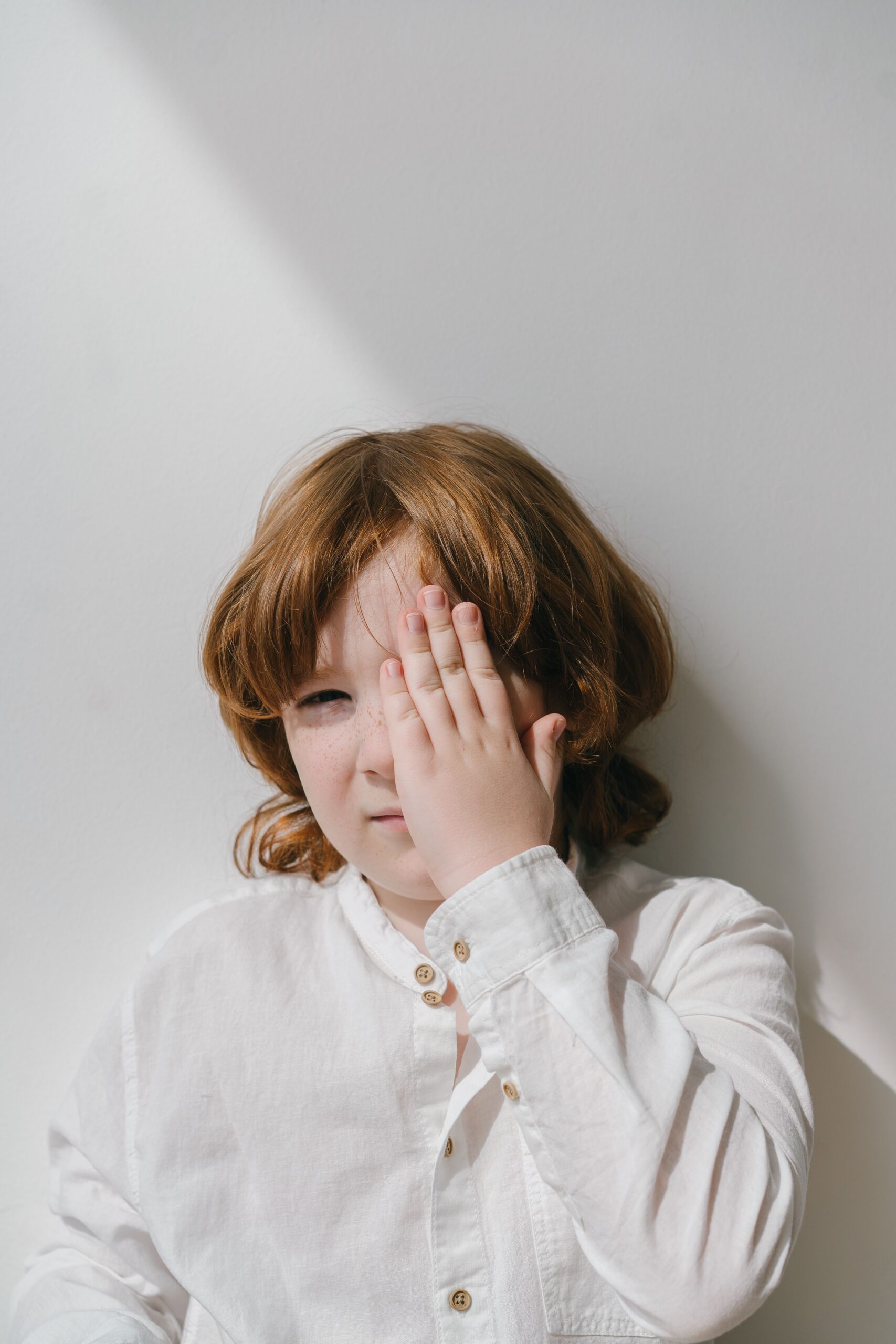
What is selective mutism?
Why some children talk at home but not at school
Your child chats non-stop at home. They sing in the car, tell long stories at dinner and argue with their siblings. Then at school, at a birthday party or with a relative, they go completely quiet.
If this sounds familiar, you may have wondered whether your child is just shy, or whether something else is going on. For some children, the answer is selective mutism.
What is selective mutism?
Selective mutism is an anxiety-related condition. A child who speaks comfortably in some places, usually at home with close family, finds they are unable to speak in others, such as at school, kinder or around unfamiliar adults.
The key word is “unable”. Children with selective mutism are not choosing to be silent, being rude or trying to control a situation. In those moments, anxiety makes speaking feel impossible. Many children describe it as their words getting stuck.
Selective mutism often becomes noticeable between the ages of two and five, and is commonly first picked up when a child starts kinder or school and the demands to speak increase.
Selective mutism or situational mutism?
You may also hear selective mutism called situational mutism. Many clinicians and families now prefer this name because it is more accurate and more neuroaffirming. “Selective” can suggest a child is choosing not to speak, while “situational” describes what is really happening: speaking feels impossible in certain situations, not by choice.
Selective mutism is still the formal clinical term, so you will see both names used. In this article we use selective mutism because it’s the term most parents search for, but at Spectrum Therapy we know it’s about the situation, not the child’s willingness to talk.
Why does my child talk at home but not at school?
This is one of the most common questions parents ask, and it is one of the clearest signs of selective mutism.
At home, your child feels safe and knows what to expect. School brings new people, noise, routines and the pressure of being expected to answer. For a child with selective mutism, that pressure triggers a freeze response, and speech is one of the first things to go.
Over time, a pattern can form. Teachers and classmates learn that your child doesn’t talk, so they stop expecting it or start answering for them. That brings short-term relief, but it can also keep the silence going.
Signs of selective mutism
Every child is different, but common signs include:
- Speaking freely at home but not at school, kinder or in public
- Talking to some people, such as parents and siblings, but not others
- Using gestures, nodding, pointing or writing instead of speaking
- Freezing, looking away or appearing stiff when asked a question
- Whispering, or speaking only when no one else can hear
- The pattern lasting more than a month, not just the first few weeks at a new school
Some children with selective mutism are also autistic, have speech or language differences, or experience other forms of anxiety. A thorough assessment helps build a full picture of what your child needs.
Is it just shyness?
Shyness and selective mutism can look similar at first. The difference is consistency and impact. A shy child usually warms up and starts talking once they feel comfortable. A child with selective mutism stays silent in certain settings week after week, even with people they know and like.
If your child’s silence is affecting their friendships, learning or ability to ask for help, it’s worth talking to a professional.
How selective mutism therapy can help
Support for selective mutism focuses on reducing anxiety around speaking, step by step, so it never feels forced. At Spectrum Therapy, our speech pathologists and psychologists work together with families, and with schools where possible. Support may include:
- Building confidence gradually: small, achievable steps, such as a child speaking to a parent while a new person is nearby, then slowly widening the circle
- Taking the pressure off: helping families and teachers change how they ask questions, so speaking feels less like a test
- Working with school: practical strategies for teachers and a plan that supports your child in the classroom
- Anxiety support: helping your child understand and manage the feelings that come with speaking
- Checking speech and language: making sure any communication differences are understood and supported
Every child moves at their own pace. The aim is to help your child feel safe enough to use their voice in the places that matter to them.
Tips for parents
- Don’t pressure or bribe: pushing a child to speak usually increases anxiety
- Avoid labelling them as shy: children often live up to the labels they hear
- Praise brave moments: notice any communication, including a wave or a nod
- Talk to their teacher: let them know your child is not being defiant
- Seek support early: the sooner support starts, the sooner patterns can begin to shift
Selective mutism therapy in Baulkham Hills, Sydney
If your child talks at home but not at school, you don’t have to work it out alone. Spectrum Therapy is a paediatric allied health clinic in Baulkham Hills, supporting families across the Hills District and Sydney.
Book a chat with our team to find out how our speech pathologists and psychologists can support your child.
This article is general information only and is not a substitute for individual advice from a qualified health professional.


It all started with a big dream.
Nadia, our founder, had a vision to transform child development care. During her training and professional career, she saw kids how fragmented systems failed children with complex needs.
She believed finding the right support shouldn’t be an exhausting battle
So in 2017, Nadia opened Spectrum Therapy to turn that dream into reality.
Since then, we’ve grown into a team of passionate professionals — speech therapists, occupational therapists, psychologists, and exercise physiologists — united by a shared mission to serve families with children with different abilities.
We're proud to offer a neurodiverse-affirming space where your child can thrive, grow, and receive comprehensive care under one roof.