Play and Interaction Skills
Psychologists | Speech Language Pathologists | Occupational Therapists | Exercise Physiologists | Therapy Assistants
Psychologists | Speech Language Pathologists | Occupational Therapists | Exercise Physiologists | Therapy Assistants |
What are play and interaction skills?
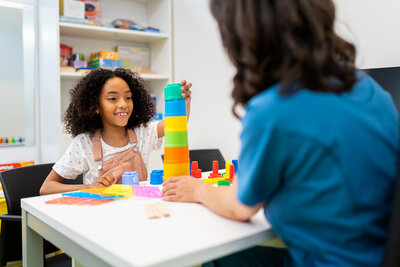
Play is so much more than fun — it's one of the most important ways children learn to communicate, connect with others, and make sense of the world around them. Through play, children develop language, social understanding, creativity, problem-solving, and emotional skills.
Interaction skills are the building blocks of connection: making eye contact in a way that feels comfortable, sharing attention with another person, taking turns, responding to others, and gradually building more complex social play over time.
For some children, play and interaction develop differently. They might prefer solitary play, find it hard to engage with others in back-and-forth interactions, use toys in repetitive or sensory ways, or struggle to move from parallel play into cooperative, shared play with peers. This is particularly common in Autistic children and those with social communication differences, and it's absolutely something a speech pathologist can help with.

What does difficulty with play and interaction look like?
- Prefers to play alone rather than with others
- Has limited interest in interacting with adults or peers
- Finds it hard to follow another person's lead or share attention
- Uses toys in repetitive or sensory ways rather than imaginatively
- Struggles to take turns during play
- Has difficulty transitioning between activities or moving on from a preferred play activity
- Is interested in people but finds the back-and-forth of interaction unpredictable or confusing
- Plays alongside peers but not yet with them
These differences aren't a sign that your child doesn't want to connect — in many cases, they deeply do. The support is about finding ways to make connection feel more accessible and enjoyable for them.
Why is play so important for communication?
When children play, they:
- Learn to share attention and take turns — the foundations of conversation
- Develop vocabulary through exploring objects, actions, and ideas
- Build understanding of narrative and story through pretend play
- Practise social communication in low-pressure, enjoyable situations
- Develop the flexibility and imagination that underpin creative language use
For young children especially, supporting play skills is often the most natural and effective way to support communication development overall.
How can speech therapy help?
- Assessing your child's current play and interaction profile
- Building the early interaction skills that form the foundation for communication — like joint attention, turn-taking, and sharing enjoyment
- Supporting the development of more complex and flexible play over time
- Coaching parents and caregivers to follow their child's lead and support interaction in everyday play
- Group programs that give children supported opportunities to connect with peers
- Collaboration with educators to support play and interaction at kindergarten or school
Therapy is always guided by your child's interests — because the best play-based therapy doesn't feel like therapy at all.
Myths and facts about play and interaction skills
Myth
"They just need more playdates."
FACT
Exposure to social situations doesn't automatically build interaction skills for children who are finding these things challenging. Structured, supported opportunities with the right guidance tend to be much more effective than simply increasing social time.
Myth
"Autistic children don't like to play with others."
FACT
Many Autistic children are very interested in connecting and playing — they may just do it differently, or find the unpredictability of social play challenging. Our approach is always to support connection in ways that work for the individual child.
Myth
"They'll grow out of it once they start school."
FACT
While some children do naturally develop more complex play skills over time, others need targeted support to build these foundations. The earlier we can support play and interaction development, the better the outcomes tend to be for communication and social skills overall.
Frequently asked questions
What age should children be engaging in pretend play?
Simple pretend play (like pretending to drink from a cup) typically emerges around 12–18 months, with more complex imaginative and symbolic play developing from around age 2–3. If your toddler or preschooler isn't yet showing interest in pretend play or interactive games, it's worth mentioning to a speech pathologist.
Can an OT help with play skills too?
Yes, play is also a focus area for occupational therapists, particularly when sensory processing, motor skills, or emotional regulation are affecting how a child engages in play. At Spectrum Therapy Australia, our speech pathologists and OTs often work together on play goals for a truly whole-child approach.
My child plays beautifully at home but struggles with other kids, what does that mean?
Yes. This is really common. Playing with familiar adults or siblings in a predictable environment feels very different to playing with peers in a less controlled setting. A speech pathology assessment can help identify where the specific challenges are and what kind of support would help most.


Behind every success story, there’s a passionate support team.
The Spectrum Therapy team is as diverse as they come — speech therapists, occupational therapists, psychologists, exercise physiologists, and therapy assistants. They’re not just experts, they’re the secret sauce behind our whole-child approach.
Occupational therapy
Speech therapy
Psychology therapy
Diagnostic And Functional Assessment
Social Connection Programs
Masterclasses For Parents & Professionals
Occupational therapy
Navigating the physical world is more than just playing on the monkey bars! OT helps teach essential life skills, like writing, using the bathroom, dressing independently, and emotion regulation and sensory difficulties.
LEARN MORE
Occupational therapy
Speech therapy
Psychology therapy
Diagnostic And Functional Assessment
Social Connection Programs
Masterclasses For Parents & Professionals
Speech therapy
Many of us take communication for granted, but its subtleties can be tricky for others. Our speech-language pathologists help your child master these language nuances and develop their social skills.
LEARN MORE
Occupational therapy
Speech therapy
Psychology therapy
Diagnostic And Functional Assessment
Social Connection Programs
Masterclasses For Parents & Professionals
Psychology Therapy
Therapy can benefit anyone, but for individuals with autism, it can be transformative. We provide a safe space to address big emotions, helping your child find calm, clarity, and confidence.
LEARN MORE
Occupational therapy
Speech therapy
Psychology therapy
Diagnostic And Functional Assessment
Social Connection Programs
Masterclasses For Parents & Professionals
Diagnostic and Functional Assessment
A diagnosis is more than a label. It’s an explanation. Understanding your child’s diagnosis is the first step to unlocking the right support and resources they need.
Book an assessment
Occupational therapy
Speech therapy
Psychology therapy
Diagnostic And Functional Assessment
Social Connection Programs
Masterclasses For Parents & Professionals
Social Connection Programs
There’s no better way for your child to master friendship skills than in an interactive setting! This gives your child a fun and engaging opportunity to practise social interactions in a supportive environment.
LEARN MORE
Occupational therapy
Speech therapy
Psychology therapy
Diagnostic And Functional Assessment
Social Connection Programs
Masterclasses For Parents & Professionals
Masterclasses For Parents
Sick of endless Googling and second-guessing? Our self-paced masterclasses empower you with the tools to support your child's unique needs and become the parent you've always wanted to be.
Browse
We offer more services, including intensives and other specialised programs.
TAKE A DEEPER DIVE INTO ALL OUR SERVICES
TAKE OUR CLINIC FOR A TEST DRIVE WITH THIS FREE GUIDE
5 Ways to Help Your Child Regulate Big Emotions
Feeling overwhelmed trying to help your little one with big feelings? This FREE comprehensive guide, packed with evidence-based tools, covers everything from environment to sensory strategies, giving you practical support you can use right away.

RESOURCES YOU’LL FIND HELPFUL
Visit our shop!
This is your one-stop shop for all things early childhood development! Here, you can find our guides, self-paced courses, stimming toys, and more, accessible to families everywhere.
